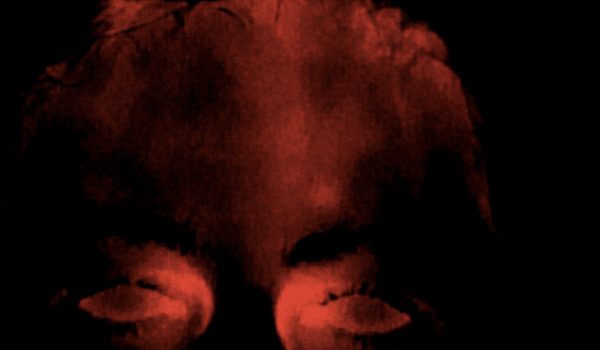
Session 1
Some color returns to the forehead, but high variability shows more training is needed.
Train your brain to be your optimal self.
A non-invasive complement to talk therapy that helps you make progress faster. Like going to the gym for your brain.
ADHD, addiction, anxiety, autism (ASD), emotional overwhelm from unregulated sensory processing, headaches, migraines, mood disorders, and trauma.
Book a free consultationThese infrared images show the prefrontal cortex of a brain with a mood disorder, taken after each neurofeedback session. As uniform color increases, the individual's mood improves.
Some color returns to the forehead, but high variability shows more training is needed.

More color means more prefrontal activity and improved mood.

Variability drops as the rest of the forehead brightens.
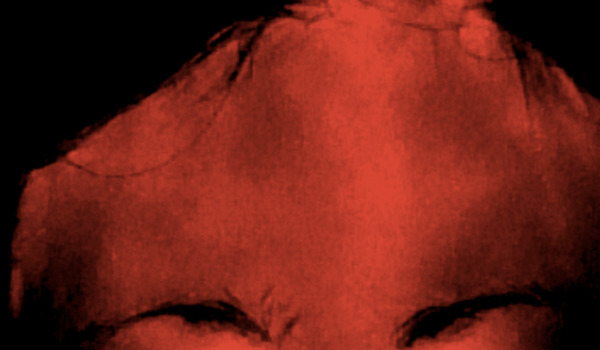
Bright, even color. Improved mood lasts longer and keeps building with training.
We use passive infrared hemoencephalography (pIR HEG), a form of neurofeedback that reads thermal data rather than electrical signals, to strengthen the brain's executive center.
A sensor on the forehead measures changes in warmth produced by activity and blood flow in the prefrontal cortex. Nothing breaks the skin and there is no electrode contact.
The readings are fed back to you on a screen. While watching, you gradually learn to produce a steadier, more controlled response.
With practice, the prefrontal cortex gets better at managing rapid changes, calming stress reactions, and supporting focus and impulse control.
HEG does not send electricity or energy into the brain. It simply shows the brain what it is doing so it can practice regulating itself, much as a mirror helps you correct a movement. Thermal data is also less susceptible to artifacts, like eye blinks, than electrical (EEG) neurofeedback.
Neurofeedback trains your brain by reading its thermal or electrical activity and feeding it back to you on a screen. It can help with a wide range of concerns, including:
HEG trains the prefrontal cortex, home of planning, working memory, and impulse control.
Training calms the excessive stress response these conditions often share.
Many people find migraines become less frequent, less intense, or easier to stop.
Training can ease overwhelm from unregulated sensory processing and speed recovery.
Stronger executive functioning makes repetitive, unhealthy patterns easier to change.
Also used for frontal lobe brain injury and for paranoia, delusions, and hallucinations, alongside other care.
Underneath many mental health problems is chronic stress: a prolonged, excessive response to benign stimuli. HEG neurofeedback's fundamental goal is to reduce the rate and magnitude of that response (Carmen, 2017), which is why it helps across so many diagnoses.
“HEG neurofeedback offers what might be considered a psychological theory of everything.”— Alira Family Therapy
Frank was a lifelong stutterer who carried all the residual shame that goes along with it. Within a few weeks of neurofeedback, his stuttering began to dissipate. In tears, he shared that his only regret was not trying neurofeedback decades ago.
In a study of 100 people with recurring migraines, psychologist Jeffrey Carmen reported that more than 90% of those who completed at least six pIR HEG sessions saw significant improvement. These findings are encouraging, though they do not guarantee how any individual will respond.
The conservative estimate is once per week, but it depends on how much your prefrontal cortex fatigues. If the mental effort in a session exceeds the energy available, your brain needs rest to recover. Some people can do more than one session a week, and your provider will help you find the right recovery period. If you have any brain challenges or limitations, once a week is recommended. An infrared image can show fatigue after a session as a dark spot on the forehead. The most important thing is that recovery happens between sessions.
Yes. pIR HEG is intrinsically safe: there is no electrode interface with the skin, and it doesn't send electricity or energy into the brain or “do” anything to you. It teaches a different, better way to regulate emotions and concentration.
FDA registration mainly regulates advertising and makes sure a product's claims are accurate and it won't harm anyone. Like other wellness tools that don't break the skin, pIR HEG is not required to be FDA registered, and the system we use is not. The common wellness disclaimer applies: it is not intended to diagnose, treat, cure, or prevent disease. It is used alongside other therapeutic approaches to optimize brain functioning and reduce stress.
EEG neurofeedback reads the brain's electrical activity, which is easily disrupted by artifacts such as eye blinks. HEG reads thermal data from blood flow in the prefrontal cortex, which is less susceptible to artifacts, and it specifically trains the brain's executive functioning center.
No. Neurofeedback complements talk therapy and can help you resolve what you're working on faster than with talk therapy alone. It also works on its own.
We are not an emergency service. Call or text 988, the Suicide & Crisis Lifeline, free and available 24/7. If someone is in immediate danger, call 911.
We really care and want to help. Let's talk about whether neurofeedback is right for you.
 Emily Brown, Client Care CoordinatorSchedule a consultation with Emily to be matched with the right therapist or coach for your needs and your timeframe.
Individuals · Therapy InMotion, Los Gatos, CA